


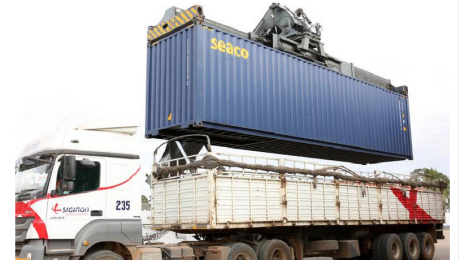
Logistics and warehousing businesses have emerged as some of the biggest winners during the pandemic. As businesses move online, those who have logistics networks to deliver goods and services for these businesses stand to reap big. And for a country heavily reliant on imports such as Kenya, a seamless logistics network is integral. Read more

Mother’s Day is observed every year with dates varying across different geographical areas. This day is set aside to celebrate the gift that is motherhood and the people who bear this name directly or indirectly. Mothers have often been described as the epitome of love and sacrifice and set the pace for the rest of their children’s life. A mother’s influence over her child is seen both in the tangible and intangible attributes. For instance, it has been asserted that children get their intelligence from their mother. This is argued on the basis that the genes responsible for intelligence are contained on the X chromosome. The mother carries 2 X chromosomes and as such contributes one X to the child while the father donates either the X or Y chromosome which will also determine whether the child is male or female. The mother’s influence is also reflected in the child’s weight, temperaments, dominant hands, vulnerability to certain diseases, among others.
The one thing that the world seems to be united on, is that mothers across the globe need to be spoiled often and especially on Mother’s Day. As hugs and kisses along will not suffice, flowers which signify a mother’s sweet smell, gentle love, warmth, brightness, and optimism have become a tradition as a gift for mothers. Countries such as Kenya that are global flower power houses continue to supply the world with various flowers to bring this occasion to life. After all, a day like this is incomplete without a bouquet of bright yellow flowers.

A spot check by the Business Daily shows that the average shipment charges on a 40-foot container from China had breached the Sh646,000-mark, up from about Sh430,800 in March initially as traders scrambled for the few available containers. The latest rise means freight charges have jumped 95 per cent since December.
“The freight rates have increased to some extent with some additional charges being incurred. For instance, due to scarcity of empty containers globally, the freight rates, especially from China to East Africa have gone up from the initial Sh430,800 ($4,000) per 40ft container to almost Sh646,200 ($6,000),” Siginon Group managing director Meshack Kipturgo told the Business Daily.


Kenya’s vision to move to a middle-income economy driven by industrial transformation is hinged on its ability upscale the manufacturing sector and offer products that are competitive into the market. The Kenyan manufacturing sector has often agitated for solutions to the challenges the industry faces primarily, regulatory inefficiencies, high production costs, logistics, cash flow and liquidity challenges. These have been aptly summarized in the Kenya Association of Manufacturing (KAM) Manufacturing Priority Agenda 2021.
Transport and logistics inefficiencies at the port of Mombasa and the Nairobi Inland Container Depot have been highlighted as key manufacturing pain points. The high cost of transportation and delays during cargo clearance and evacuation of both raw material and finished goods has made it difficult for Kenya to produce competitive products. These costs have ended up in payment of high demurrage charges and delayed overall operations at manufacturing plants due to logistical hitches.
At a previous media engagement, the KAM Chief Executive Phyllis Wakiaga decried the port challenges particularly with clearance at the port and minimum tax. As a result of these inefficiencies the cost of products are affected and unfortunately passed on to the consumer.
There is no doubt that for the manufacturing sector to thrive, it must be supported by a well-oiled supply chain system that is guided by strategies and policies that encourage swift and cost-effective import and export of raw materials and finished goods. However, this is not always the case, players in the logistics sector find themselves stuck between a rock and a hard place when it comes to meeting and satisfying customer needs while ensuring their business breaks even. The over regulated logistics industry often must contend with challenges such as fuel hikes, traffic jams, poor road networks and border delays which then dilute the ambition for consistent service delivery in this capital-intensive sector. However, due to Kenya’s unique position in the region, the demand for service remains high indicating the critical role logistics players in serving various economic sectors.
Job Kemboi, Siginon Group’s Commercial Manager asserts that a healthy logistics sector will see all the other economic sectors thrive and prosper in Kenya and beyond the region. The Kenyan economy being a net importer of goods indicates that all sectors rely on our ports to efficiently import raw materials or finished products to enable them to focus on their trade. The demand for logistics via Kenyan ports extends to the larger East African region with customers from EAC and the Great Lakes regions using the Port of Mombasa to move their cargo.

Air Cargo Week captured comments from the Siginon Aviation, Managing Director on page 6: Read Here